
Doonbeg, Co Clare
Quiet beaches, dramatic Atlantic scenery and a slower pace of life make Doonbeg one of the most rewarding places to visit on Ireland's west coast. Sitting on the Wild Atlantic Way in west Clare, this small village is often overshadowed by better-known destinations such as Doolin and the Cliffs of Moher, yet it offers visitors an authentic experience with fewer crowds and easy access to some of Ireland's finest coastal landscapes.
Whether you're planning a day trip, a golfing holiday, or using Doonbeg as a base to explore County Clare, you'll find plenty to see within a short drive. From long sandy beaches and scenic cliff walks to traditional pubs, excellent seafood and world-class links golf, Doonbeg combines natural beauty with genuine Irish hospitality.
Its location also makes it an ideal starting point for exploring the wider region. Loop Head Peninsula, Kilkee, Spanish Point, the Burren National Park and the Cliffs of Moher can all be reached comfortably, allowing visitors to experience some of Ireland's most spectacular scenery without changing accommodation every night.
This guide brings together everything you need to plan your visit. You'll find practical advice, local recommendations, suggested itineraries and honest insights into what makes Doonbeg worth adding to your Irish itinerary.
Whether you're visiting for a few hours or several days, this guide will help you make the most of your time in one of County Clare's most overlooked coastal destinations.
Table Of Contents
Why Visit Doonbeg
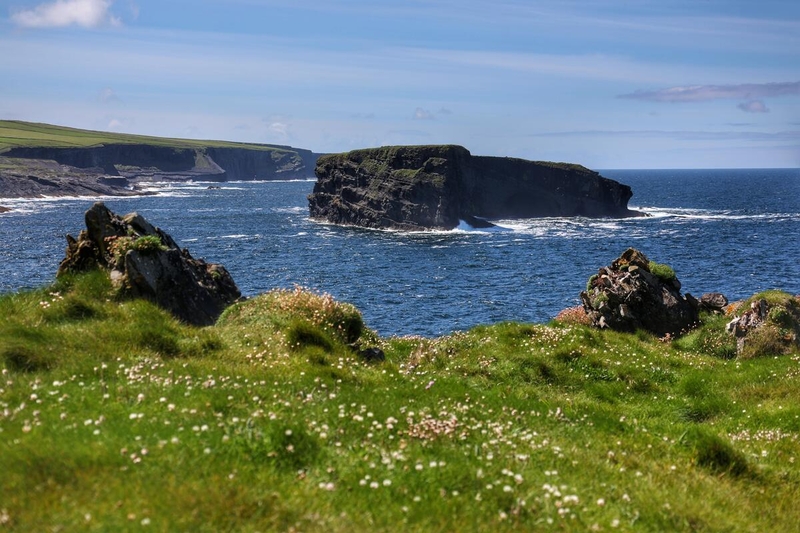
Kilkee Cliffs, Co Clare
There are places in Ireland that attract millions of visitors each year, and then there are places like Doonbeg—quiet, understated and rewarding for those willing to venture a little further along the Wild Atlantic Way.
Located on the west coast of County Clare, Doonbeg offers something that has become increasingly difficult to find in many of Ireland's most famous destinations: space to slow down and experience the landscape without the crowds.
Rather than ticking off landmarks, visitors come here to enjoy long coastal walks, wide sandy beaches, traditional Irish hospitality and some of the finest Atlantic scenery in the country. It's a destination where the journey between places is often just as memorable as the attractions themselves.
An Ideal Base for Exploring West Clare
One of Doonbeg's greatest strengths is its location. Positioned between Kilkee and Spanish Point, the village provides easy access to many of County Clare's best-known attractions while remaining peaceful enough to return to at the end of the day.
Within an hour's drive you can visit:
- The Cliffs of Moher
- The Burren National Park
- Loop Head Lighthouse
- Kilkee Cliff Walk
- Spanish Point Beach
- Miltown Malbay
- Lahinch
- Ennis
For travellers planning a multi-day stay in County Clare, Doonbeg works exceptionally well as a central base, allowing you to explore different parts of the county without changing accommodation each night.
Spectacular Atlantic Coastline
The coastline surrounding Doonbeg is one of its defining features.
Miles of sand dunes, quiet beaches and rugged Atlantic views create a landscape that changes constantly with the weather and tides. Even during the height of summer, it's often possible to find stretches of beach where you'll encounter only a handful of other visitors.
Whether you're walking along White Strand, watching surfers at Doughmore Bay or simply enjoying the view from a coastal road, the scenery feels wild and unspoilt.
For photographers, early mornings and evenings often provide some of the best light on Ireland's west coast.
A Relaxed Irish Village
Unlike larger tourist towns, Doonbeg has retained its village character.
You'll find welcoming pubs, locally owned businesses and restaurants serving fresh seafood and traditional Irish dishes without the queues that can develop elsewhere during peak season.
It's the kind of place where conversations happen naturally, locals are happy to offer recommendations and visitors are encouraged to take their time rather than rush from one attraction to the next.
World-Class Golf
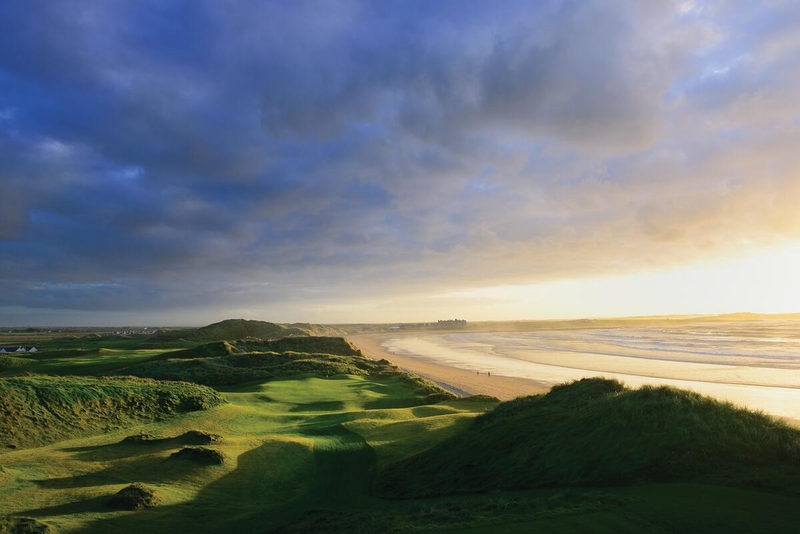
Golf enthusiasts from around the world know Doonbeg for one reason in particular—its championship links course overlooking the Atlantic Ocean.
Designed to make the most of the natural dunes and coastal landscape, the course has earned an international reputation and attracts golfers looking for one of Ireland's premier links experiences.
Even if golf isn't part of your itinerary, the surrounding coastline and scenery are worth visiting in their own right.
A Different Side of the Wild Atlantic Way
Many travellers experience the Wild Atlantic Way through its busiest destinations. While places like the Cliffs of Moher deserve their reputation, they represent only one part of Ireland's west coast.
Doonbeg offers a quieter perspective.
Here, you'll discover hidden beaches, scenic coastal roads, traditional music sessions, local history and small villages where everyday life continues much as it has for generations.
It's an opportunity to experience Ireland beyond the headline attractions while still being within easy reach of everything County Clare has to offer.
Perfect for Every Type of Traveller
Whether you're travelling as a couple, family or small private group, Doonbeg adapts well to different styles of holiday.
It's ideal for:
- Visitors driving the Wild Atlantic Way.
- Couples looking for a peaceful coastal escape.
- Golf holidays.
- Photography trips.
- Walking and nature holidays.
- Families wanting open beaches and outdoor activities.
- Luxury travellers seeking a quieter base in west Clare.
- Visitors interested in Irish culture, music and local food.
Explore Beyond Doonbeg
While there's plenty to enjoy within the village itself, many of County Clare's most memorable experiences lie just beyond it.
A private tour allows you to explore the wider region without worrying about unfamiliar roads, parking or planning a route. From dramatic coastal drives and hidden viewpoints to historic sites and traditional villages, every itinerary can be tailored to match your interests and pace.
Whether you're interested in the Cliffs of Moher, Loop Head, the Burren or a full-day journey along the Wild Atlantic Way, starting from Doonbeg gives you access to some of Ireland's most spectacular scenery with the flexibility of a private guide.
Where is Doonbeg?
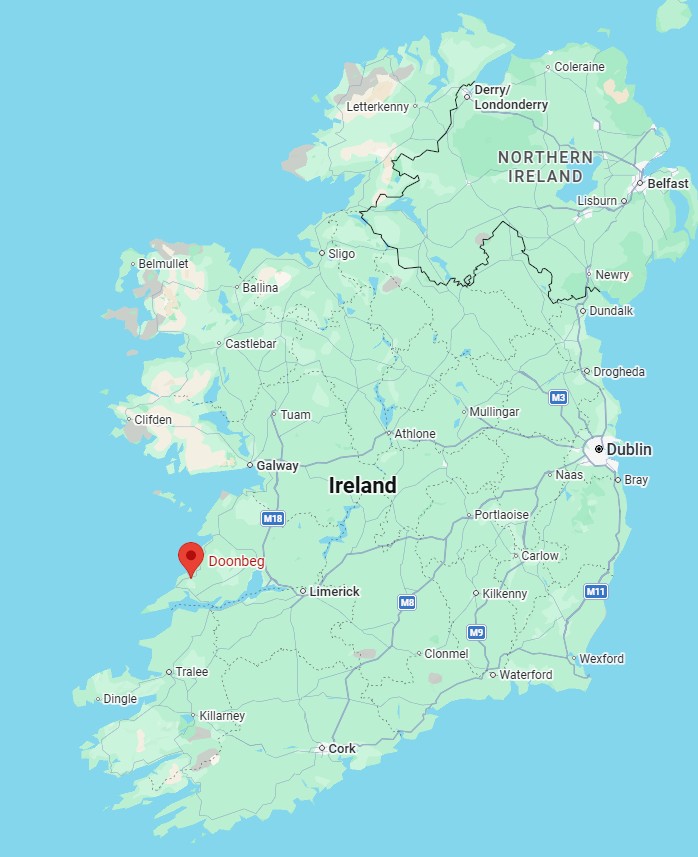
Doonbeg is a small coastal village in west County Clare, on Ireland's famous Wild Atlantic Way. Overlooking the Atlantic Ocean, it sits between the seaside towns of Kilkee and Spanish Point, making it an excellent base for exploring the western coastline of Clare.
Although many visitors first hear of Doonbeg because of its renowned golf course, its location is one of its greatest strengths. From here, some of Ireland's best-known natural attractions, scenic drives and traditional villages are all within comfortable driving distance.
Unlike larger tourist centres, Doonbeg offers a quieter setting while still providing easy access to the highlights of the Wild Atlantic Way.
Distances from Doonbeg
Doonbeg is ideally positioned for exploring west Clare and beyond.
| Destination | Approximate Drive Time |
|---|---|
| Kilkee | 15 minutes |
| Spanish Point | 20 minutes |
| Miltown Malbay | 20 minutes |
| Loop Head Lighthouse | 40 minutes |
| Lahinch | 40 minutes |
| Cliffs of Moher | 50 minutes |
| The Burren | 1 hour |
| Ennis | 50 minutes |
| Shannon Airport | 1 hour |
| Limerick City | 1 hour 30 minutes |
| Galway City | 2 hours |
These drive times make Doonbeg an excellent location for visitors who want to explore the region without moving between hotels every day.
How to Get to Doonbeg
By Car
Driving is by far the easiest way to reach Doonbeg and explore the surrounding area. The village is connected by the N67, the main coastal route through west Clare, which links many of the Wild Atlantic Way's most popular destinations.
If you're travelling from Shannon Airport, the drive takes around one hour through the Clare countryside. From Dublin, expect a journey of approximately three and a half hours, while Cork is around two and a half hours away.
Many visitors include Doonbeg as part of a larger Wild Atlantic Way road trip, travelling north towards Galway or south through Kerry.
By Air
The nearest airport is Shannon Airport, approximately one hour away by road. Shannon offers regular flights from the UK, Europe and seasonal services from North America, making it one of the most convenient gateways for exploring Ireland's west coast.
Visitors arriving through Dublin Airport or Cork Airport can also reach Doonbeg by rental car, although the journey is longer.
By Public Transport
Public transport options to Doonbeg are limited compared with Ireland's larger towns and cities.
Bus services connect the village with nearby towns, but they are not always convenient for visitors wishing to explore the wider region. Many of County Clare's most scenic locations are difficult to reach without a car.
For this reason, most visitors either hire a vehicle or choose a private guided tour to make the most of their time in the area.
Doonbeg on the Wild Atlantic Way
Stretching over 2,500 kilometres, the Wild Atlantic Way is one of the world's longest defined coastal touring routes, linking some of Ireland's most dramatic landscapes.
Doonbeg sits on one of its most scenic sections, where long sandy beaches, rolling dunes and rugged Atlantic coastline create a landscape that changes with every season.
Its location makes it an easy stop for travellers exploring west Clare, but it's equally suited to longer stays. Rather than simply passing through, many visitors use Doonbeg as a base for discovering nearby highlights such as Loop Head Peninsula, the Cliffs of Moher, the Burren, Kilkee and Spanish Point.
Is Doonbeg a Good Base for Exploring County Clare?
For many visitors, the answer is yes.
Staying in Doonbeg allows you to experience a quieter side of the Wild Atlantic Way while remaining within easy reach of Clare's best-known attractions. Accommodation is generally more relaxed than in busier tourist towns, and after a day exploring the coast, it's easy to return to the village for a good meal or a traditional Irish pub.
Whether you're planning a golfing break, a walking holiday or a scenic road trip, Doonbeg offers an excellent balance of convenience, natural beauty and authentic village life.
Explore the Region Without the Driving
While west Clare is best explored at a leisurely pace, many visitors prefer not to spend their holiday navigating unfamiliar roads or planning routes.
Private day tours from Doonbeg make it easy to visit the Cliffs of Moher, the Burren, Loop Head and other highlights while enjoying the journey just as much as the destinations. With a local guide, you'll discover scenic viewpoints, quiet villages and places that are often missed by visitors following standard itineraries.
History of Doonbeg
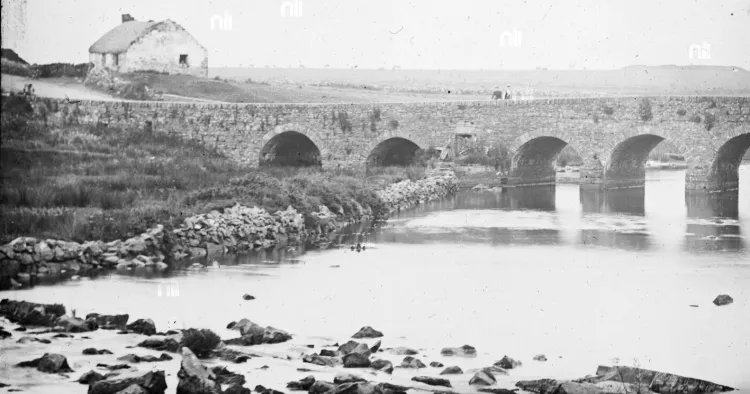
Doonbeg in West Clare as photographed by Thomas Mason as part of the National Library of Ireland’s Mason Photographic Collection.
Doonbeg's history is closely connected to the landscape that surrounds it. Situated on the western edge of County Clare, between the Atlantic Ocean and the traditional farming lands of west Clare, the area has been shaped by centuries of settlement, fishing, agriculture, religion and community life.
Today, visitors come to Doonbeg for its beaches, coastal scenery and relaxed village atmosphere, but the area has a much deeper story stretching back thousands of years.
Ancient Roots of the Doonbeg Area
The history of Doonbeg begins long before the village itself existed. The wider west Clare landscape contains evidence of Ireland's earliest communities, with ancient monuments, stone structures and archaeological sites found throughout the region.
The area around Doonbeg was shaped by generations of farming communities who worked the land, raised livestock and adapted to the challenges of living on Ireland's exposed Atlantic coast.
The surrounding countryside still reflects this history. Traditional field patterns, stone walls and old farmsteads tell the story of a rural landscape that has remained connected to the land for centuries.
The Meaning Behind the Name Doonbeg
The name Doonbeg comes from the Irish name Dún Beag, meaning "small fort" or "little stronghold."
The name reflects Ireland's long history of ringforts and fortified settlements, which were common throughout the countryside during the early medieval period. These structures served as defended farmsteads and places of community life.
While much of the original landscape has changed over time, the name itself preserves a connection to the area's early Irish heritage.
Medieval West Clare
During the medieval period, west Clare was influenced by powerful Gaelic families, particularly the O'Brien dynasty, who controlled large parts of the region.
The coastline around Doonbeg played an important role in local life. The Atlantic provided opportunities for fishing and trade, while the surrounding farmland supported communities that depended on agriculture.
Life in west Clare was closely tied to the seasons, with communities relying on local knowledge of the land and sea to survive.
Doonbeg and the Atlantic Coast
For generations, the Atlantic Ocean has been central to Doonbeg's identity.
Fishing, coastal farming and maritime traditions shaped daily life in the area. The ocean provided resources but also brought challenges, with storms and difficult conditions forming part of everyday life for coastal communities.
The beaches and coastline that attract visitors today were once important working landscapes, used by local people for fishing, gathering resources and travelling between coastal settlements.
The Village of Doonbeg
The modern village developed as a centre for the surrounding rural community. Like many Irish villages, its importance came not from size but from the role it played in everyday life.
The village provided essential services, meeting places and social connections for people living throughout the surrounding countryside.
Traditional pubs, local businesses and community spaces became important gathering points, helping preserve the strong sense of identity that remains in Doonbeg today.
The Great Famine and Emigration
Like many rural areas of Ireland, Doonbeg and the surrounding west Clare region were affected by the Great Famine of the 1840s.
The loss of potato crops caused widespread hardship, with many families experiencing poverty, hunger and displacement. Like many parts of Ireland, west Clare also experienced significant emigration as people left in search of opportunities abroad.
The impact of this period remains part of the wider history of the region, reflected in family histories and connections between west Clare and communities around the world.
Doonbeg in the Modern Era
In more recent decades, Doonbeg has evolved from a traditional farming and fishing community into a destination for visitors seeking an authentic west coast experience.
The development of tourism, particularly along the Wild Atlantic Way, has introduced more visitors to the area's beaches, scenery and cultural heritage.
The arrival of world-class golf at Trump International Golf Links & Hotel Doonbeg brought international attention to the village, attracting golfers and luxury travellers from around the world while maintaining the character of the surrounding landscape.
Why Doonbeg's History Matters Today
Understanding Doonbeg's history adds another layer to the experience of visiting.
The beaches, roads and villages around west Clare are not simply scenic locations—they are part of a living landscape shaped by generations of Irish families, traditions and communities.
A visit to Doonbeg is an opportunity to experience both the natural beauty of the Wild Atlantic Way and the history of the people who have called this coastline home for centuries.
For visitors exploring with a local guide, the history of Doonbeg becomes part of the journey. Stories of old villages, coastal traditions, local characters and hidden places help bring the landscape to life in a way that cannot be found on a map.
Best Things to Do in Doonbeg
Doonbeg may be a small village, but its location on the west coast of County Clare makes it an excellent destination for travellers looking to experience the Wild Atlantic Way at a slower pace.
The appeal of Doonbeg is not found in a long list of attractions packed into one location. Instead, it is in the combination of dramatic coastline, quiet beaches, traditional culture and easy access to some of Ireland's most famous landscapes.
Whether you are visiting for a few hours, staying for a weekend, or using Doonbeg as a base to explore west Clare, these are some of the best things to do in and around the village.
1. Walk Along White Strand Beach
One of the most beautiful beaches near Doonbeg, White Strand is a long sandy beach backed by dunes and surrounded by Atlantic scenery.
The beach is popular with locals for walking, swimming and enjoying the changing moods of the ocean. On a calm summer evening, it is one of the best places in the area to watch the sunset over the Atlantic.
Unlike some of Ireland's better-known beaches, White Strand often feels peaceful even during the busier months. It is a place to slow down, walk barefoot along the sand and experience the natural beauty of west Clare.
Visitors should be aware that Atlantic beaches can have strong currents and changing conditions, so always follow local safety advice when swimming.
2. Explore Doughmore Beach and the Atlantic Coast
Doughmore Beach is another spectacular coastal location close to Doonbeg, known for its wide-open views, dramatic dunes and powerful Atlantic waves.
The beach sits beside the famous links golf course and provides a classic west coast Ireland landscape: endless sand, wind-shaped dunes and a horizon stretching out across the Atlantic.
It is particularly impressive in the quieter months when the coastline feels completely wild. Photographers often visit for the changing light, especially at sunrise and sunset.
For many visitors, simply driving the coastal roads around Doonbeg and stopping at viewpoints along the way is one of the highlights of the area.
3. Play Golf at Doonbeg's Championship Links
Golf is one of the reasons Doonbeg has become known internationally.
The championship links course at Trump International Golf Links & Hotel Doonbeg sits among natural dunes overlooking the Atlantic Ocean. Designed to work with the existing landscape, the course offers the type of traditional links experience that attracts golfers to Ireland from around the world.
Even for non-golfers, the surrounding area is worth exploring. The coastline, dunes and views create one of the most scenic sections of the Wild Atlantic Way.
Golf visitors often combine a stay in Doonbeg with day trips throughout Clare, including the Cliffs of Moher, the Burren and Loop Head Peninsula.
4. Experience Traditional Irish Music Nearby
West Clare has one of Ireland's strongest traditional music traditions.
The nearby villages of Miltown Malbay, Kilkee and surrounding areas have long been associated with Irish music, particularly traditional sessions featuring instruments such as the fiddle, concertina and flute.
A visit to the region is not complete without experiencing the atmosphere of a traditional Irish pub session. Unlike organised performances designed purely for tourists, local sessions often remain informal gatherings where musicians play together simply because they enjoy the music.
For visitors interested in Irish culture, music is one of the most authentic ways to connect with the area.
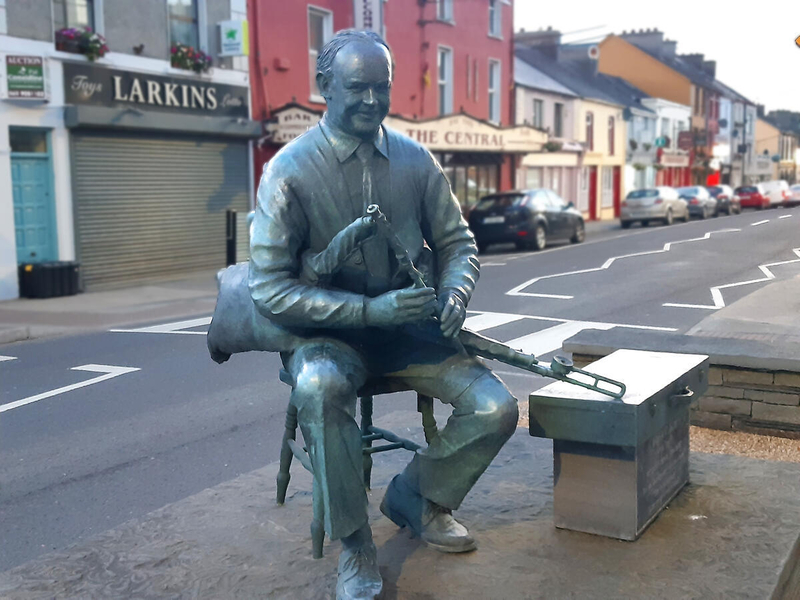
5. Visit Local Pubs and Taste West Clare Food
Doonbeg offers visitors the chance to experience genuine Irish hospitality away from the busiest tourist centres.
Local pubs provide an important part of village life, offering places to enjoy a drink, a meal and conversation with locals. Seafood is naturally a highlight throughout west Clare, with fresh catches from the Atlantic featuring on many menus.
When exploring the area, look beyond just the food itself. The character of Irish pubs—the stories, conversations and atmosphere—is often one of the most memorable parts of a visit.
6. Take a Scenic Drive Along the Wild Atlantic Way
Some of the best experiences around Doonbeg happen between destinations.
The coastal roads surrounding the village offer spectacular views, with changing landscapes of beaches, cliffs, farmland and Atlantic coastline.
Popular scenic routes include:
- Doonbeg to Kilkee
- Doonbeg to Loop Head Peninsula
- Doonbeg to Spanish Point
- Doonbeg to Lahinch and the Cliffs of Moher
Allow extra time for these drives. The best stops are often the viewpoints you did not plan to visit.
7. Discover Loop Head Peninsula
One of County Clare's most rewarding day trips, Loop Head Peninsula offers dramatic coastal scenery without the crowds found at some of Ireland's more famous attractions.
Highlights include:
- Loop Head Lighthouse
- Kilbaha cliffs
- Bridges of Ross
- Coastal walking routes
- Atlantic viewpoints
The peninsula represents the quieter side of the Wild Atlantic Way and pairs perfectly with a stay in Doonbeg.
8. Visit Kilkee and Its Famous Cliffs
Approximately 15 minutes from Doonbeg, Kilkee is one of west Clare's best-known seaside towns.
The area is famous for its dramatic cliffs, natural rock pools and coastal walks. The Kilkee Cliff Walk provides a quieter alternative to some of Ireland's busier cliff experiences while offering spectacular Atlantic views.
Kilkee is also a good place to stop for coffee, lunch or a traditional seaside walk.
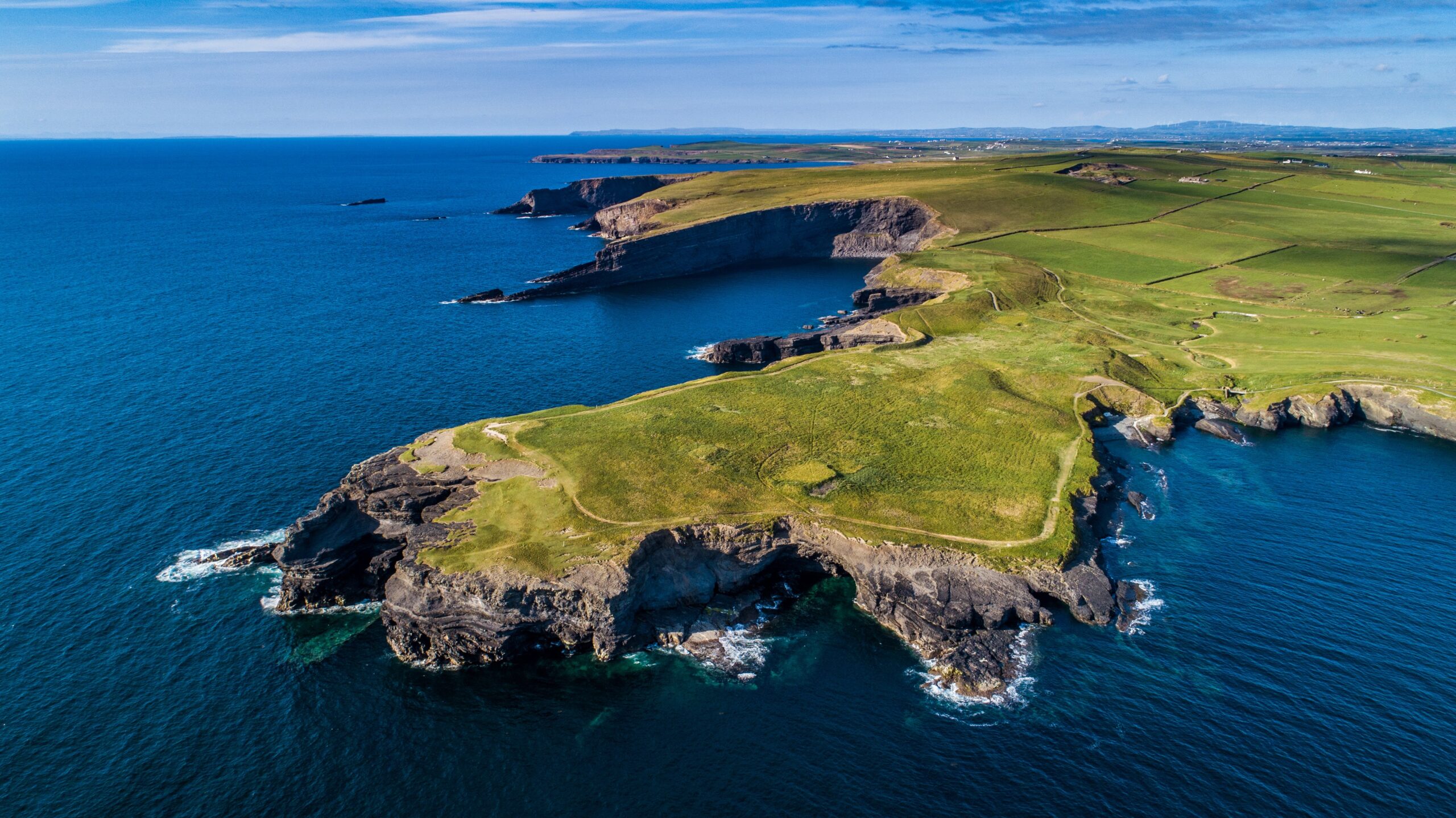
9. Explore the Burren and Cliffs of Moher
While not located directly in Doonbeg, two of County Clare's most famous attractions are easily accessible as day trips.
The Cliffs of Moher need little introduction, with their towering cliffs and unforgettable Atlantic views. Nearby, the Burren offers a completely different landscape of limestone pavements, rare flora and ancient monuments.
Combining these destinations with smaller villages and viewpoints creates a much richer experience than simply visiting the main attractions and leaving.
10. Use Doonbeg as Your Base for Exploring Clare
One of the biggest advantages of visiting Doonbeg is its position.
Rather than spending your entire trip moving between destinations, you can stay in one location and explore the surrounding region at a comfortable pace.
A well-planned itinerary from Doonbeg can include coastal scenery, historic sites, traditional villages, food experiences and some of Ireland's most famous attractions.
For travellers who prefer a more personal experience, a private tour from Doonbeg allows the route to be built around your interests, whether that means photography stops, hidden coastal viewpoints, family history, golf, food or Ireland's landscapes.
Beaches Near Doonbeg
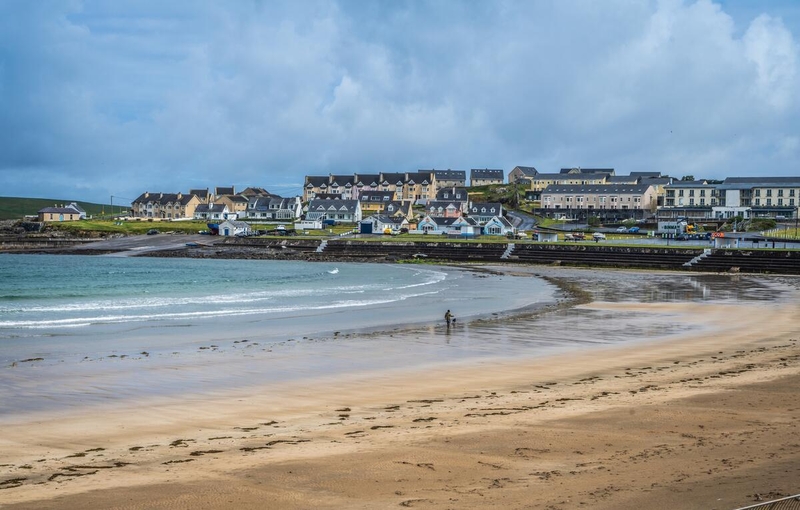
The beaches around Doonbeg are among the highlights of west County Clare. Unlike some of Ireland's more famous coastal locations, the beaches here remain relatively peaceful, offering visitors the chance to experience the Wild Atlantic Way without large crowds.
The coastline around Doonbeg is shaped by long sandy shores, rolling dunes, Atlantic waves and wide-open views. These beaches are not simply places to stop for a photograph—they are landscapes that invite you to slow down, walk, explore and experience the power of Ireland's western coastline.
Whether you enjoy coastal walks, photography, swimming, surfing or simply taking in the scenery, the beaches near Doonbeg are some of the area's most rewarding places to visit.
White Strand Beach
White Strand is one of the most popular beaches near Doonbeg and a favourite with both locals and visitors.
Located a short drive from the village, this beautiful sandy beach is known for its clear waters, natural dunes and uninterrupted views across the Atlantic Ocean.
The beach has a relaxed atmosphere and is ideal for:
- Walking along the shoreline
- Watching sunsets
- Family outings
- Photography
- Enjoying the coastal scenery
On a summer evening, White Strand is one of the best places near Doonbeg to experience the famous west coast sunset. The combination of golden light, Atlantic waves and open horizons creates the kind of landscape that draws visitors to Ireland's Wild Atlantic Way.
For walkers, the beach provides a peaceful place to enjoy the fresh Atlantic air and appreciate the scale of the surrounding landscape.
Visiting White Strand
White Strand is easily reached from Doonbeg by car and can be combined with other nearby attractions such as Doughmore Beach, Kilkee and Loop Head Peninsula.
As with many Irish beaches, conditions can change quickly. The Atlantic coastline is beautiful but powerful, so visitors should take care when swimming and follow local safety guidance.
Doughmore Beach
Doughmore Beach is another spectacular coastal location close to Doonbeg, offering one of the most dramatic beach landscapes in west Clare.
Backed by extensive sand dunes and facing directly towards the Atlantic, Doughmore feels wild and untouched. The beach stretches along the coastline beside the famous Doonbeg links golf course, creating a striking combination of natural scenery and dramatic coastal views.
It is particularly impressive during changing weather, when the Atlantic creates constantly shifting colours and light across the landscape.
Doughmore is especially popular with:
- Landscape photographers
- Golf visitors
- Coastal walkers
- Visitors looking for quieter beaches
- Anyone wanting to experience the raw beauty of the Atlantic coast
The beach is a reminder of why this section of Clare became such an important part of the Wild Atlantic Way.
Kilkee Beach and Cliffs
Approximately 15 minutes from Doonbeg, Kilkee offers a different coastal experience.
While Doonbeg's beaches are known for their open sandy landscapes, Kilkee is famous for its dramatic cliffs, sheltered bay and traditional seaside atmosphere.
Kilkee has been a popular holiday destination for generations, with visitors drawn to its natural rock pools, coastal walks and impressive Atlantic views.
The Kilkee Cliff Walk is one of the best alternatives to the more heavily visited cliff attractions elsewhere in Ireland. It offers spectacular scenery while maintaining a quieter, more local feel.
Highlights include:
- The Pollock Holes natural swimming pools
- Kilkee Cliff Walk
- Atlantic viewpoints
- Traditional seaside atmosphere
Spanish Point Beach
Around 20 minutes from Doonbeg, Spanish Point is another beautiful west Clare beach worth visiting.
The beach takes its name from Spanish ships that were wrecked along this coastline during the Spanish Armada of 1588. Today, it is better known for its long sandy beach, surfing conditions and connection to the wider Wild Atlantic Way.
Spanish Point is popular with:
- Surfers
- Families
- Beach walkers
- Visitors exploring Miltown Malbay and west Clare
The surrounding area also has a strong musical tradition, making it a good stop for visitors interested in combining coastal scenery with Irish culture.
The Best Time to Visit Doonbeg's Beaches
The beaches around Doonbeg can be enjoyed throughout the year, with each season offering something different.
Summer (June–August)
Summer provides the longest days and the best chance of warm weather. Beaches are at their busiest during this period, although Doonbeg's coastline generally remains far quieter than many major tourist destinations.
Spring (March–May)
Spring is an excellent time for coastal walks, with fewer visitors and changing landscapes as nature returns after winter.
Autumn (September–November)
Many locals consider autumn one of the best times to visit. The Atlantic storms begin to arrive, creating dramatic scenery, while beaches become much quieter.
Winter (December–February)
Winter reveals the true character of the west Clare coastline. Powerful waves, empty beaches and dramatic skies create an unforgettable Atlantic experience.
Coastal Walks Around Doonbeg
The beaches near Doonbeg are best experienced on foot.
Walking allows visitors to appreciate the details often missed when travelling by car—the sound of the waves, the changing colours of the landscape and the wildlife that lives along the coast.
Popular coastal experiences include:
- Sunset walks at White Strand
- Beach walks at Doughmore
- Kilkee Cliff Walk
- Coastal drives towards Loop Head
For photographers, the early morning and evening hours often provide the most dramatic conditions.
Golf in Doonbeg
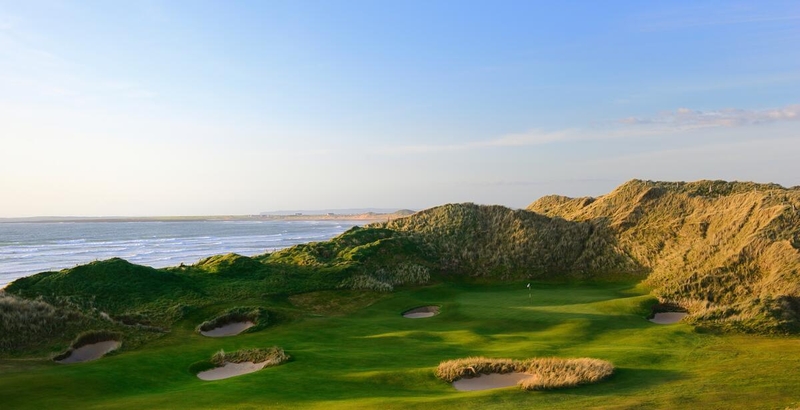
For many visitors, golf is one of the reasons Doonbeg first appears on the map. Set along the Atlantic coastline of west Clare, the area has become recognised as one of Ireland's premier links golf destinations, combining challenging coastal golf with some of the most dramatic scenery in the country.
However, even for visitors who do not play golf, the connection between Doonbeg and the sport is part of the character of the area. The sweeping dunes, Atlantic views and traditional links landscape are central to what makes this part of the Wild Atlantic Way so memorable.
Trump International Golf Links & Hotel Doonbeg
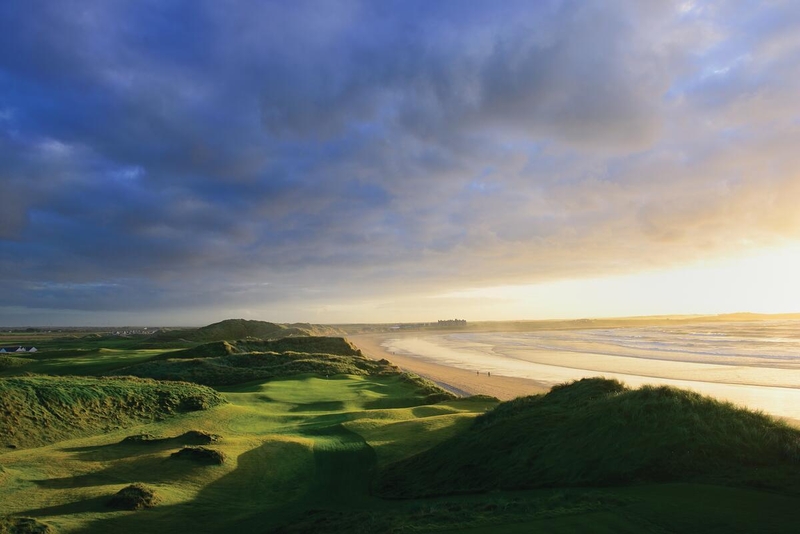
The centrepiece of golf in Doonbeg is Trump International Golf Links & Hotel Ireland, a championship links course located beside Doughmore Beach on the Atlantic coast.
The course was designed to work with the natural landscape rather than reshape it, using the existing dunes and coastal terrain to create a traditional links experience. The course stretches through dramatic sand dunes overlooking the Atlantic, with ocean views from many holes across the course.
Opened in 2002, the course was originally designed by Greg Norman and later redesigned by links architect Dr Martin Hawtree, who refined the layout while maintaining the character of the natural landscape.
For golfers visiting Ireland, Doonbeg offers something different from many inland courses. The experience is shaped by the elements—wind, weather, changing light and the natural contours of the land.
Why Golfers Visit Doonbeg
Ireland is famous worldwide for its links golf, and Doonbeg has earned its place among the country's notable coastal courses.
The appeal comes from a combination of:
Atlantic Ocean Setting
Few golf experiences compare with playing beside the Atlantic Ocean. The sound of the waves, sea views and exposed coastal setting create an atmosphere that feels uniquely Irish.
The course follows the natural contours of the dunes, giving golfers constantly changing views throughout the round.
Traditional Links Challenge
Links golf is different from typical parkland golf. Instead of tree-lined fairways and manicured landscapes, players deal with natural terrain, coastal winds and strategic challenges.
At Doonbeg, weather conditions can influence every shot. A calm morning and a windy afternoon can feel like two completely different courses.
A Complete Golf Destination
Many visitors combine a round at Doonbeg with a wider Irish golf itinerary.
West Clare is home to several excellent courses, including:
- Trump International Golf Links Doonbeg
- Lahinch Golf Club
- Kilkee Golf Club
The region allows golfers to experience different styles of links golf while staying in one of Ireland's most scenic coastal areas.
Doonbeg Golf for Non-Golfers
You do not need to play golf to appreciate Doonbeg's connection with the sport.
The golf course sits within one of the most beautiful sections of coastline in Clare, with views across Doughmore Beach and the Atlantic Ocean.
Many visitors enjoy:
- Walking the nearby coastline
- Photographing the dunes
- Visiting the surrounding beaches
- Enjoying the resort restaurants and scenery
- Exploring nearby attractions such as Loop Head and the Cliffs of Moher
For couples or groups where only some members play golf, Doonbeg works well because there are plenty of other experiences nearby.
Golf Holidays in Doonbeg
Doonbeg is an excellent choice for travellers planning a golf holiday in Ireland.
For international visitors, adding Doonbeg to a wider Ireland golf tour creates an opportunity to combine world-class courses with authentic Irish landscapes and villages.
Exploring Doonbeg Beyond the Golf Course
One of the advantages of choosing Doonbeg as a golf destination is that the area offers much more than a single course.
A golfer visiting for several days can easily include:
- The Cliffs of Moher
- The Burren
- Loop Head Peninsula
- Kilkee cliffs
- Traditional Irish music sessions
- Scenic Wild Atlantic Way drives
This makes Doonbeg particularly appealing for visitors who want a golf trip combined with culture, scenery and local experiences.
Walking & Nature in Doonbeg
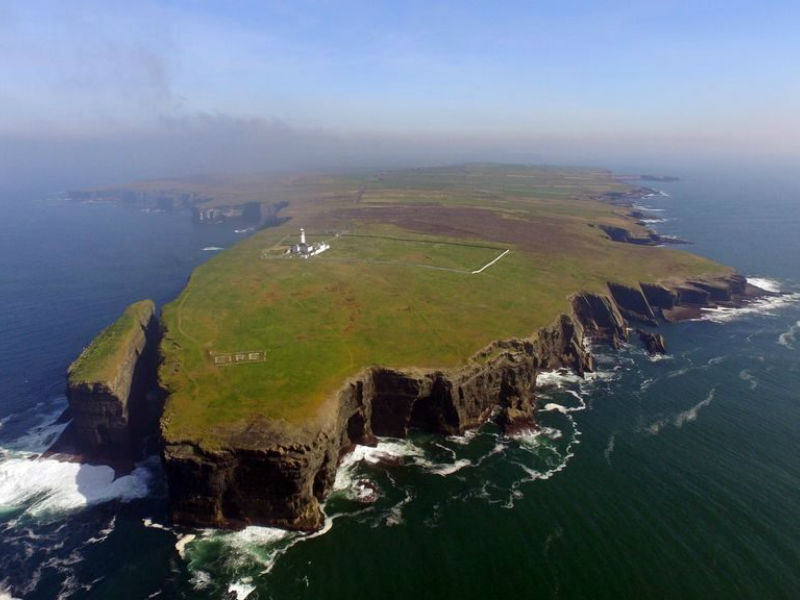
One of the greatest pleasures of visiting Doonbeg is simply getting outdoors. Whether you're walking along a quiet beach, following a cliff-top trail or watching the Atlantic roll in from a scenic viewpoint, west Clare is a place where nature takes centre stage.
The landscape around Doonbeg has remained remarkably unspoilt. Rolling sand dunes, open farmland, rocky headlands and miles of coastline create an ever-changing environment that rewards visitors in every season.
Unlike some of Ireland's busiest walking destinations, many of the trails and beaches around Doonbeg still offer a sense of peace and solitude, allowing you to experience the Wild Atlantic Way at your own pace.
Walking at Your Own Pace
One of the advantages of staying in Doonbeg is that you don't need to tackle long hikes to enjoy the landscape.
Many of the area's best experiences involve relaxed walks along beaches, quiet country roads and coastal viewpoints rather than challenging mountain trails.
Whether you're looking for a short morning stroll or a full day exploring west Clare, there's no shortage of opportunities to connect with nature
Recommended Walks Near Doonbeg
- White Strand Beach – A peaceful stretch of golden sand just outside Doonbeg, perfect for a relaxed coastal walk with sweeping Atlantic views and spectacular sunsets.
- Doughmore Beach & Sand Dunes – Wander through towering sand dunes and along a wild Atlantic beach where the ever-changing landscape is as impressive as the ocean itself.
- Kilkee Cliff Walk – One of County Clare's finest coastal trails, offering dramatic cliff-top scenery, sea stacks and breathtaking views without the crowds of the Cliffs of Moher.
Wildlife Around Doonbeg
The coastline around Doonbeg supports a wide variety of wildlife throughout the year.
Depending on the season, visitors may see:
- Dolphins offshore
- Grey seals resting near the coast
- Gannets diving for fish
- Oystercatchers and curlews along the shoreline
- Buzzards and kestrels over the countryside
- Wildflowers covering the dunes during spring and summer
Nature lovers don't need to travel far. Simply slowing down during a beach walk or scenic drive often reveals wildlife that many visitors overlook.
Nature Through the Seasons
Every season offers a different perspective on Doonbeg's landscape.
Spring
Wildflowers begin to bloom across the dunes and hedgerows, while longer daylight hours make walking especially enjoyable.
Summer
Warm evenings and extended daylight create ideal conditions for beach walks, coastal drives and sunset photography.
Autumn
The Atlantic becomes more dramatic as weather systems move in from the ocean, creating impressive waves and constantly changing skies.
Winter
Although temperatures remain relatively mild, winter brings a quieter atmosphere. Empty beaches, crisp coastal air and dramatic seascapes reveal a different side of west Clare.
Photography and Scenic Viewpoints
Doonbeg is a favourite destination for photographers because the landscape changes throughout the day.
Some of the best places to capture the scenery include:
- White Strand Beach
- Doughmore Beach
- Coastal roads south towards Kilkee
- Loop Head Peninsula
- Atlantic viewpoints along the Wild Atlantic Way
Sunrise and sunset often provide the most striking light, particularly when the sky clears after Atlantic showers.
Traditional Music & Pubs in Doonbeg
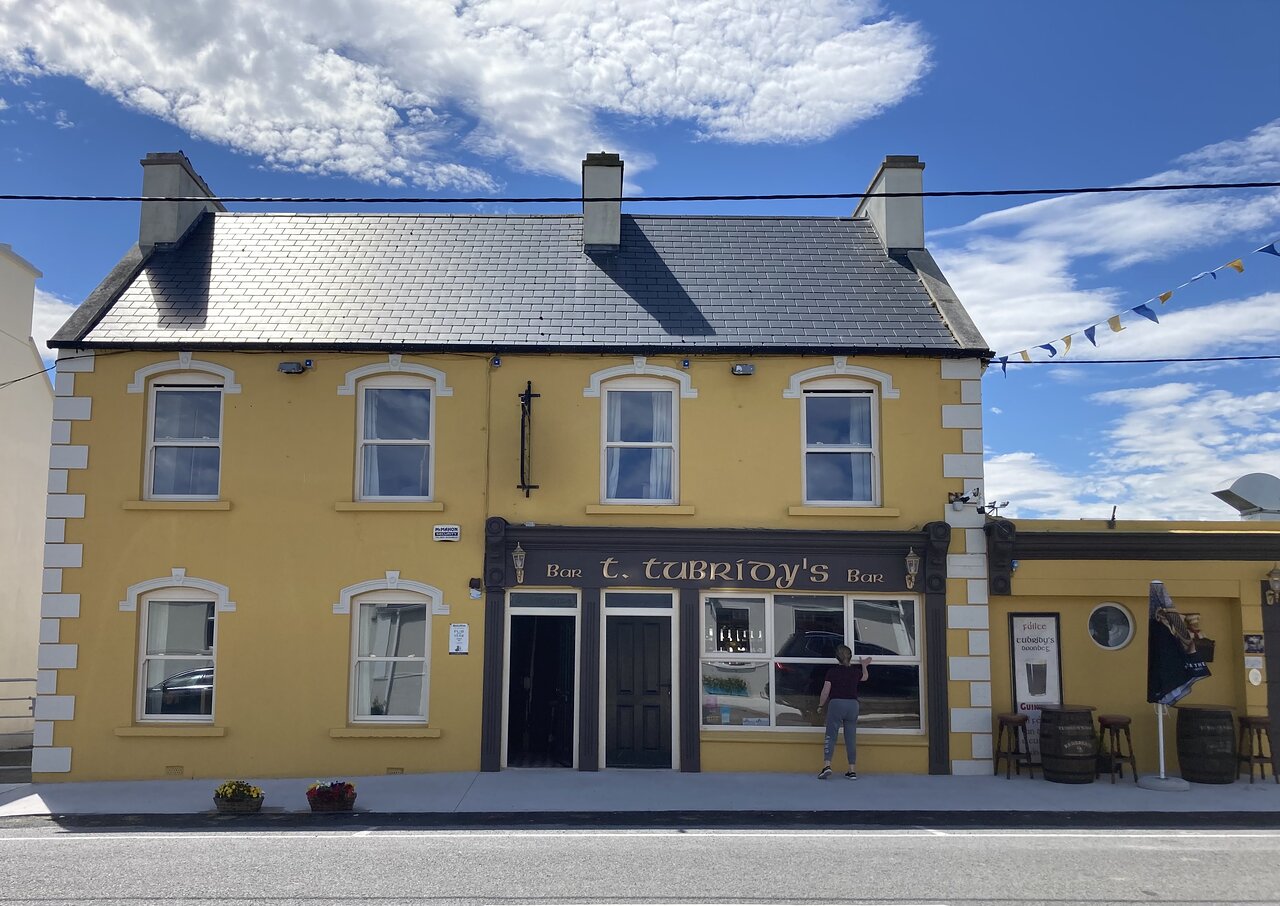
One of the best ways to experience Irish culture is by spending an evening in a local pub. While the scenery may draw visitors to Doonbeg, it's often the warm welcome, live traditional music and relaxed atmosphere that leave the strongest impression.
Unlike some of Ireland's larger tourist destinations, Doonbeg has retained its authentic village character. The pubs here are part of everyday community life, where locals gather to catch up, watch sport, enjoy a pint and, on the right night, listen to traditional Irish music.
Whether you're stopping in after a day exploring the Wild Atlantic Way or looking for a quiet evening with good food and conversation, Doonbeg offers a genuine Irish pub experience.
Traditional Irish Music
County Clare is widely regarded as one of the homes of traditional Irish music, with a rich musical heritage that has produced generations of talented musicians.
While organised music sessions can occasionally be found in Doonbeg, some of the best traditional music in west Clare is only a short drive away.
Nearby towns such as Miltown Malbay, Spanish Point and Kilkee regularly host traditional sessions where local musicians gather to play fiddles, concertinas, flutes, bodhráns and other traditional instruments.
These sessions are informal, welcoming and deeply rooted in the local community, offering visitors an authentic glimpse into one of Ireland's oldest cultural traditions.
Pubs in Doonbeg
Although Doonbeg is a small village, it has several welcoming pubs where visitors can enjoy a drink, good food and a friendly atmosphere.
Some popular places to visit include:
Morrissey's Pub
A long-established local favourite, Morrissey's is known for its welcoming atmosphere and traditional Irish hospitality. It's the kind of place where visitors quickly feel at home and conversations come naturally.
Tubridy's Bar & Restaurant
Serving both food and drinks, Tubridy's is a popular choice for visitors looking to enjoy fresh local produce in a relaxed setting. It's equally suited to a casual lunch or an evening meal after exploring west Clare.
The Igoe Inn
Located in the centre of the village, The Igoe Inn is another traditional Irish pub where visitors can enjoy a quiet pint and experience everyday life in Doonbeg.
Beyond Doonbeg
If you're happy to travel a little further, west Clare offers some of Ireland's best traditional music venues.
Miltown Malbay
Just 20 minutes away, Miltown Malbay is internationally recognised for its traditional music heritage and is home to the famous Willie Clancy Summer School each July. Throughout the year, the town's pubs regularly host excellent music sessions.
Kilkee
Kilkee combines a lively seaside atmosphere with traditional Irish hospitality. During the summer months, several pubs feature live music, making it a popular evening destination.
Spanish Point
Known for its beautiful beach and relaxed atmosphere, Spanish Point also has welcoming pubs where visitors can enjoy live music during the tourist season.
Experience Local Culture
Traditional pubs remain at the heart of Irish community life.
They're places where stories are shared, music is played and visitors are welcomed rather than simply served. While landmarks and scenic drives are an important part of any trip to Clare, spending an evening in a local pub offers a different kind of connection with the area.
It's often these simple moments—a tune played on a fiddle, a conversation with a local or a quiet pint after a day exploring—that become the memories visitors remember most.
Restaurants & Cafés in Doonbeg
Doonbeg is small, but there are several good options for breakfast, coffee, lunch and dinner, with a mix of traditional pubs, restaurants and casual cafés.
For visitors, the advantage is that you don't have to leave the village every evening to find somewhere to eat. You can spend the day exploring the coast, return to Doonbeg, and have dinner locally before settling in for the evening.
Morrissey's Doonbeg
Morrissey's Doonbeg is one of the village's better-known places to eat, combining a relaxed pub atmosphere with a more contemporary restaurant offering. It's a good option for an evening meal after a day exploring the coast.
Tubridy's Bar & Restaurant
Tubridy's Bar & Restaurant is a long-established Doonbeg pub and restaurant dating back to 1777. Its restaurant has a strong focus on fish dishes, and the pub also hosts regular live music, making it a good choice if you want to combine dinner with some local atmosphere.
The Yard Doonbeg
For coffee, breakfast or something casual during the day, The Yard Doonbeg is a local coffee shop in the village. It's particularly useful for visitors heading out for a day of exploring and looking for somewhere to stop before getting on the road.
Seafood in West Clare
Being on the Atlantic coast, seafood is naturally part of the food culture around Doonbeg. You'll find fish and seafood dishes on local menus, with nearby coastal towns providing even more choice.
If food is an important part of your trip, it is worth looking beyond Doonbeg itself and including places to eat in Kilkee, Spanish Point, Lahinch and further along the coast.
A Good Place to End the Day
One of the pleasures of staying in Doonbeg is that dinner doesn't need to be complicated.
After a day visiting beaches, walking the cliffs or exploring Loop Head, you can return to the village, have a meal locally and spend the evening in a traditional pub. If you're lucky, there may be live music as well.
For visitors looking for an Ireland experience that feels less staged and more connected to local life, these simple evenings can be just as memorable as the major attraction
Where to Stay in Doonbeg
Doonbeg is a good choice for visitors who want to stay on the west Clare coast rather than in one of the larger tourist towns. Accommodation is relatively limited compared with places such as Lahinch or Doolin, but that is part of the appeal. The village provides a quieter base while keeping many of the area's main attractions within easy reach.
Where you stay will largely depend on the type of trip you're planning, from a luxury golf break to a self-catering family holiday or a simple base for exploring the Wild Atlantic Way.
Trump International Golf Links & Hotel Doonbeg
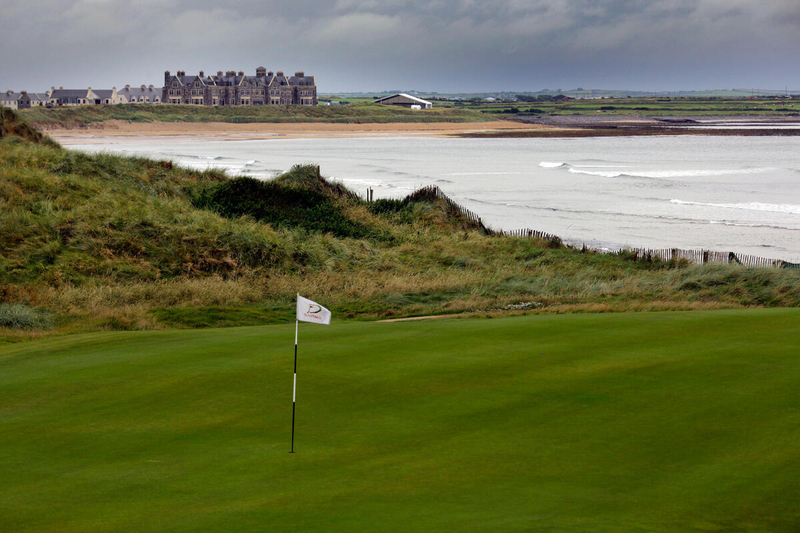
For a luxury stay, the most recognised option in the area is Trump International Golf Links & Hotel Doonbeg.
Set beside Doughmore Beach, the resort combines accommodation with the championship links course and extensive coastal surroundings. Its location makes it particularly appealing to golfers, couples and visitors looking for a higher-end stay on the Atlantic coast.
The setting is one of the main attractions. Guests are surrounded by dunes, beaches and Atlantic views, while the resort is also well placed for exploring the wider west Clare coastline.
Self-Catering Accommodation
Self-catering properties around Doonbeg can be a practical choice for families, couples and groups who want more space and the flexibility to prepare their own meals.
This type of accommodation works particularly well for longer stays, especially if Doonbeg is being used as a base for exploring County Clare over several days.
Having your own kitchen can also be useful if you're planning early starts for day trips or returning late after exploring the coast.
Bed & Breakfasts and Guest Accommodation
For visitors who prefer a more personal experience, smaller guesthouses and B&Bs in and around Doonbeg provide another option.
These can be particularly appealing if you're interested in local recommendations and a more traditional style of Irish hospitality.
Availability can vary considerably depending on the season, so booking ahead is sensible during July, August and around major local events.
Staying in Nearby Kilkee or Spanish Point
If accommodation in Doonbeg is limited for your dates, there are several alternatives nearby.
Kilkee is around 15 minutes away and offers a wider choice of accommodation, restaurants and seaside amenities. It's a good option for visitors who want to be close to the coast while having more facilities within walking distance.
Spanish Point is another attractive option, particularly for visitors interested in beaches, surfing and the traditional music scene around Miltown Malbay.
Lahinch, around 40 minutes away, has an even greater range of accommodation and is particularly popular with surfers, families and visitors exploring the Cliffs of Moher and north Clare.
How Many Nights Should You Stay in Doonbeg?
For a quick visit, one or two nights can be enough to experience the village and nearby coastline.
However, three to four nights gives you considerably more flexibility.
You could spend one day exploring Doonbeg and its beaches, another travelling around Loop Head and Kilkee, and another visiting the Cliffs of Moher and the Burren.
For a longer Ireland holiday, Doonbeg can also work as one stop within a multi-day itinerary along the Wild Atlantic Way.
Nearby Attractions from Doonbeg
One of the biggest advantages of staying in Doonbeg is its location. The village sits in a particularly scenic part of west Clare, with some of Ireland's best-known coastal attractions within easy driving distance.
You can spend the morning on a quiet beach near Doonbeg, visit dramatic Atlantic cliffs in the afternoon and finish the day with dinner in a traditional west Clare pub.
Here are some of the best places to include in your itinerary.
Kilkee
Approx. 15 minutes from Doonbeg
Kilkee is one of the closest seaside towns to Doonbeg and an easy addition to any west Clare itinerary.
The town is best known for its dramatic cliffs, sheltered horseshoe-shaped bay and the Kilkee Cliff Walk, which offers spectacular views along the Atlantic coast.
The natural rock pools known as the Pollock Holes are another local attraction and have been popular with swimmers for generations.
Kilkee is also a convenient place to stop for coffee, lunch or a walk through the town before continuing towards Loop Head.
Best for: coastal walks, swimming, photography and a traditional Irish seaside atmosphere.
Loop Head Peninsula
Approx. 35–45 minutes from Doonbeg
For travellers who want to experience the wilder side of County Clare, Loop Head Peninsula should be high on the list.
The peninsula stretches into the Atlantic at the southwestern tip of Clare, with rugged cliffs, quiet roads and wide-open ocean views. At the end of the peninsula stands Loop Head Lighthouse, one of the most recognisable landmarks in the area.
Other highlights include the Bridges of Ross, dramatic coastal cliffs and the small village of Kilbaha.
Loop Head receives considerably fewer visitors than the Cliffs of Moher, making it an excellent choice for travellers who want to get away from the busiest tourist routes.
Best for: dramatic scenery, coastal drives, photography, wildlife and quieter Wild Atlantic Way experiences.
Spanish Point
Approx. 20 minutes from Doonbeg
Spanish Point is a popular seaside destination on the west Clare coast, known for its long sandy beach, surfing and strong connection to the local music tradition.
The name comes from the Spanish Armada of 1588, when several Spanish ships were wrecked along this section of the Irish coast.
Today, Spanish Point is a relaxed place to spend a few hours by the Atlantic. The beach is particularly popular with surfers, while nearby Miltown Malbay is one of Ireland's best-known centres for traditional Irish music.
Best for: beaches, surfing, traditional music and a relaxed coastal stop.
The Cliffs of Moher
Approx. 50 minutes from Doonbeg
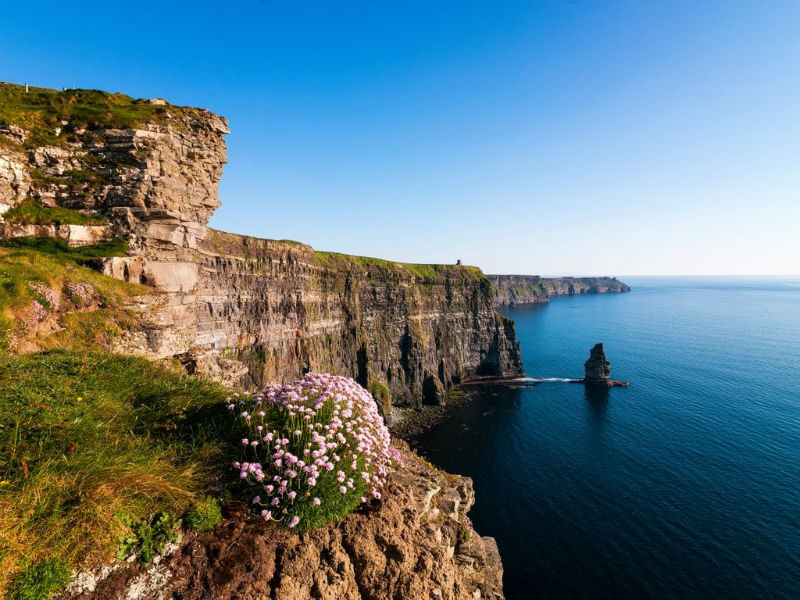
The Cliffs of Moher are one of Ireland's most famous natural attractions and one of the country's most spectacular stretches of coastline.
Rising dramatically from the Atlantic, the cliffs extend for several kilometres along the Clare coast, with views across the Aran Islands and Galway Bay on clear days.
The official visitor area provides access to viewpoints and walking routes along the cliffs. However, visiting the Cliffs of Moher is best combined with other experiences rather than treated as a quick stop.
From Doonbeg, you can take a scenic route north through west Clare, stopping at places such as Spanish Point, Miltown Malbay and Lahinch along the way.
Best for: iconic Irish scenery, photography, coastal walks and first-time visitors to County Clare.
The Burren
Approx. 1 hour from Doonbeg
The Burren is one of the most distinctive landscapes in Ireland.
Instead of the green fields and rugged cliffs commonly associated with the west coast, you'll find vast limestone pavements, underground caves, stone walls and rare wildflowers growing in the cracks between the rocks.
The region also contains important archaeological sites, including ancient tombs and monuments dating back thousands of years.
The Burren is particularly interesting in spring and early summer, when its unusual collection of alpine, Mediterranean and Irish plant species comes into bloom.
A visit to the Burren works especially well when combined with the Cliffs of Moher, creating a full day exploring two very different sides of County Clare.
Best for: geology, wildflowers, archaeology, walking and unusual Irish landscapes.
How to Combine the Attractions
The attractions around Doonbeg are close enough to combine into several different day trips, but trying to see everything in one day would mean spending too much time in the car.
A better approach is to group destinations naturally.
Coastal Clare Day
Doonbeg → Spanish Point → Miltown Malbay → Lahinch → Cliffs of Moher → Doonbeg
This route combines beaches, traditional music heritage, coastal scenery and one of Ireland's most famous landmarks.
Loop Head Day
Doonbeg → Kilkee → Kilbaha → Loop Head Lighthouse → Bridges of Ross → Doonbeg
This is the better option if you prefer dramatic scenery, quiet roads and fewer crowds.
Cliffs & Burren Day
Doonbeg → Cliffs of Moher → Doolin → Burren → Galway Bay → Doonbeg
This longer day allows you to experience two of County Clare's defining landscapes while also exploring some of the villages and scenery of north Clare.
Best Time to Visit Doonbeg
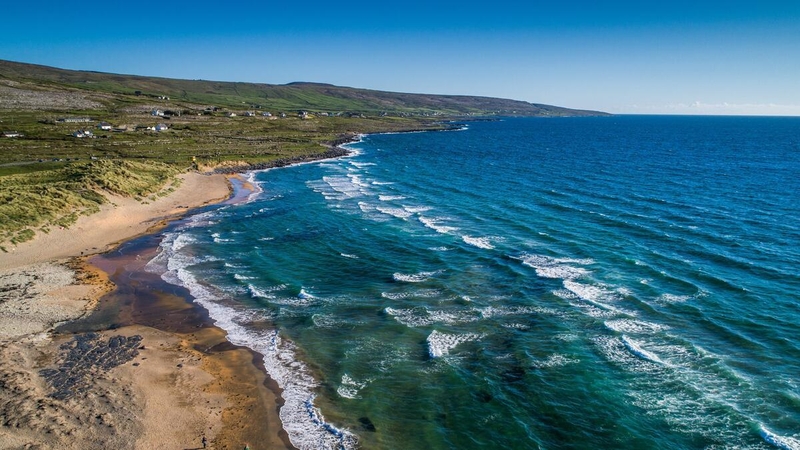
There isn't one perfect time to visit Doonbeg. The best month depends on what you want from your trip, whether that's long coastal walks, quieter beaches, golf, traditional music or dramatic Atlantic scenery.
The west coast of Ireland is strongly influenced by the Atlantic, so weather can change quickly at any time of year. That is part of the character of the region, but it is worth planning with some flexibility rather than expecting guaranteed sunshine.
May to June: A Good Balance
Late spring and early summer are excellent times to explore Doonbeg.
The days are long, the countryside is green and fresh, and visitor numbers are generally lower than during the peak summer months. This is a particularly good period for walking, photography and exploring the coastline.
Wildflowers also bring colour to the dunes and surrounding countryside, while longer daylight hours give you more time to explore.
Best for: walking, photography, sightseeing and quieter coastal trips.
July to August: The Busiest Months
Summer is the traditional high season on the west coast.
These months bring the longest days and the greatest chance of settled weather, making them popular for beach visits, golf, family holidays and road trips.
Doonbeg generally feels less crowded than major destinations such as the Cliffs of Moher or Doolin, but accommodation and popular restaurants can still be busy. If you're travelling during July or August, booking ahead is sensible.
Summer is also a good time to experience the traditional music scene around west Clare, with more events and sessions taking place throughout the region.
Best for: families, beaches, golf, road trips and traditional music.
September: One of the Best Months
September can be an excellent time to visit Doonbeg.
The busiest part of the tourist season has passed, while the weather can still be pleasant enough for walking, sightseeing and golf. The Atlantic coastline also begins to take on a more dramatic character as autumn approaches.
For couples and travellers looking for a quieter experience, September offers a particularly good balance between accessibility and atmosphere.
Best for: couples, golf, photography, coastal walks and quieter sightseeing.
October to April: The Wild Atlantic Coast
The colder months offer a completely different experience.
Winter and early spring are not the obvious choice for a traditional beach holiday, but they can be ideal for visitors who want to experience the raw character of Ireland's Atlantic coast.
Stormy skies, powerful waves and almost empty beaches can make this one of the most atmospheric times to visit. Coastal walks can be spectacular when conditions are safe, while towns and villages are noticeably quieter.
Just come prepared for changeable weather and shorter daylight hours.
Best for: dramatic scenery, photography, quiet escapes and experiencing the Atlantic in its wildest mood.
When Is Doonbeg Least Busy?
If avoiding crowds is important, consider visiting outside July and August.
May, June, September and October can offer a good combination of reasonable weather, longer daylight and fewer visitors.
The difference is particularly noticeable at some of the region's most popular attractions. Visiting the Cliffs of Moher or other major sights outside the middle of summer can make the experience considerably more relaxed.
When Is the Best Time for Golf?
Golf can be enjoyed in Doonbeg throughout the year, but the traditional golfing season runs through the spring, summer and early autumn.
Summer offers longer daylight and generally more comfortable conditions, while spring and autumn can provide a quieter experience.
Keep in mind that links golf is heavily influenced by the weather. Wind is part of the challenge and character of playing on Ireland's Atlantic coast.
When Is the Best Time for Walking?
For coastal walking, late spring through early autumn generally offers the most convenient conditions.
May, June and September are particularly attractive if you want to spend a lot of time outdoors without the peak summer crowds.
Whatever time of year you visit, check local conditions before setting out on coastal paths. Atlantic weather can change quickly, particularly around exposed cliffs and headlands.
When Is the Best Time for Traditional Music?
If traditional Irish music is an important part of your trip, summer is generally the safest choice, particularly around Miltown Malbay and west Clare.
The area has a strong year-round musical tradition, but summer brings additional visitors, events and music sessions.
If you're planning your trip specifically around traditional music, check the current local event schedules before travelling.
Our Recommendation
For most visitors, May, June and September offer the best overall balance.
You'll have enough daylight to explore the coastline and nearby attractions, a reasonable chance of good weather, and generally fewer crowds than the peak summer months.
That said, there is no bad season for the Wild Atlantic Way if you come prepared. Doonbeg's appeal is not dependent on sunshine. Some of the most memorable views can appear when Atlantic weather rolls across the coast.
And if you're booking a private tour, flexibility can make a real difference. At Emerald Irish Tours, we can adjust the day's route around the weather, spending more time outdoors when conditions are good and choosing sheltered or indoor experiences when they aren't.
Frequently Asked Questions: About Doonbeg
Yes. Doonbeg is worth visiting if you want to experience a quieter side of Ireland's west coast. Its beaches, Atlantic scenery, golf, traditional pubs and location make it a good base for exploring west Clare.
It is particularly appealing to travellers who prefer smaller villages and scenic landscapes over busy tourist centres.
Doonbeg is best known for its Atlantic coastline, beaches, links golf and location on the Wild Atlantic Way. It is also a convenient base for visiting nearby attractions including Kilkee, Loop Head, the Cliffs of Moher and the Burren.
Doonbeg is in County Clare on Ireland's west coast, between Kilkee and Spanish Point. It sits directly on the Wild Atlantic Way, overlooking the Atlantic Ocean.
The Cliffs of Moher are approximately 50 minutes by car from Doonbeg, depending on the route and traffic.
The journey can be made into a full day of sightseeing by including Spanish Point, Miltown Malbay, Lahinch and other west Clare stops along the way.
Doonbeg is approximately one hour by car from Shannon Airport.
This makes Shannon a convenient airport for visitors planning to explore County Clare and the wider west coast of Ireland.
Some of the best things to do in and around Doonbeg include:
- Walking at White Strand Beach
- Exploring Doughmore Beach and its dunes
- Playing golf at the Doonbeg links
- Visiting local pubs
- Experiencing traditional Irish music in west Clare
- Taking a coastal drive
- Visiting nearby Kilkee
- Exploring Loop Head Peninsula
The village is also a good base for day trips to the Cliffs of Moher and the Burren.
Yes. White Strand and Doughmore Beach are two of the main beaches near Doonbeg.
Both offer long sandy stretches, Atlantic views and opportunities for walking and photography. Conditions can change quickly on the west coast, so visitors should always take care near the water and follow local safety advice.
Swimming is possible at some beaches around Doonbeg when conditions are suitable, but the Atlantic coast can have strong currents, waves and changing conditions.
Visitors should check local conditions and follow any beach safety information before entering the water. A beautiful beach does not necessarily mean safe swimming conditions.
Doonbeg can be a good choice for families, particularly those who enjoy beaches, outdoor activities and a quieter holiday environment.
White Strand, nearby coastal attractions and the wider west Clare region provide plenty to explore. Having a car is useful if you want to visit several attractions during your stay.
For a short visit, two nights gives you enough time to experience Doonbeg and some of the nearby coastline.
For a more comprehensive County Clare trip, three to four nights works well. This gives you time for Doonbeg itself, Loop Head, Kilkee, the Cliffs of Moher, the Burren and other west Clare attractions without having to rush.
For most visitors, May, June and September offer a good balance of longer days, reasonable weather and fewer crowds than the peak summer months.
July and August are popular for beach holidays, golf and family travel, while the quieter months can be particularly atmospheric for coastal walks and photography.
It is possible, but having a car makes exploring the area considerably easier.
Public transport options are more limited than in larger Irish towns, and many of the best beaches, viewpoints and attractions around west Clare are spread out.
A private tour is another option for visitors who would rather not drive themselves.
There are several major attractions within easy reach of the village, including:
- Kilkee – approximately 15 minutes
- Spanish Point – approximately 20 minutes
- Loop Head Peninsula – approximately 35–45 minutes
- Cliffs of Moher – approximately 50 minutes
- The Burren – approximately 1 hour
Travel times can vary depending on traffic, road conditions and your exact destination
Yes. Its location makes it particularly useful for travellers who want to explore west Clare while staying in one place.
You can make day trips in different directions and return to Doonbeg each evening rather than changing accommodation constantly.
Yes. Emerald Irish Tours offers private day tours and multi-day itineraries from Doonbeg.
Tours can be tailored around your interests, whether you want to visit the Cliffs of Moher and the Burren, explore Loop Head, play golf, discover Irish history and culture, or create a longer Wild Atlantic Way itinerary.